Birding Tikal National Park with CAYAYA BIRDING
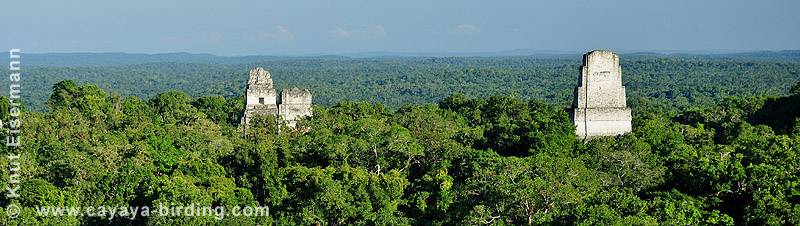
Birding Tikal is great, with its scenery dominated by impressive Mayan pyramid temples. A dense network of trails provides access to rainforest, scrub, and open areas. More than 400 bird species have been reported in Tikal National Park and its surroundings.
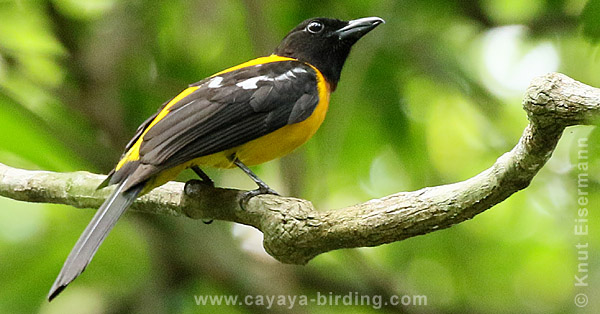
Tikal was Guatemala's first National Park – declared in 1955 – to preserve the Mayan ruins and the extensive broadleaf forest with its diverse wildlife. UNESCO then declared it a World Cultural and Natural Heritage site in 1979. Tikal National Park is part of the Maya Biosphere Reserve, the largest Neotropical rainforest north of the Amazon basin.
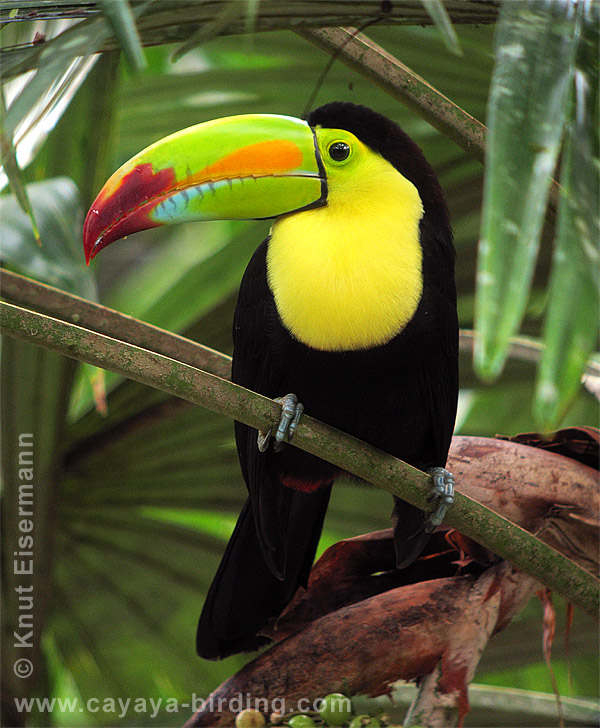
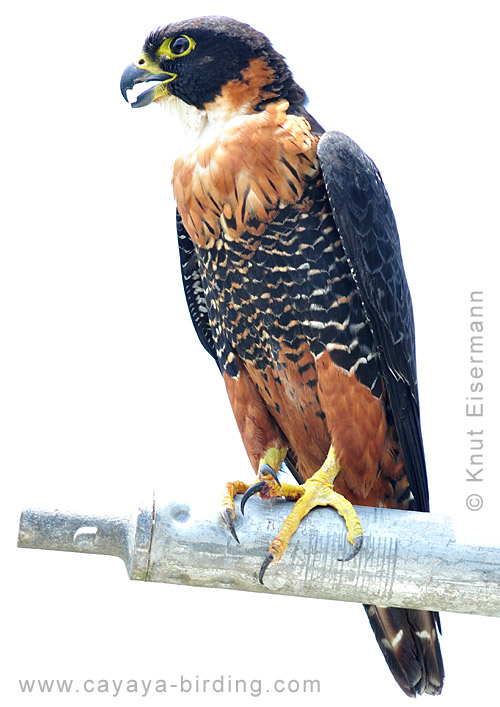
Wooden stairways provide access to the upper parts of some of the temples, which are excellent viewpoints to see canopy birds such as Keel-billed Toucan, parrots (Mealy, Red-lored, White-fronted, White-crowned, and Brown-hooded), and Neotropical raptors. Tikal is one of the best sites to see the rare Orange-breasted Falcon.
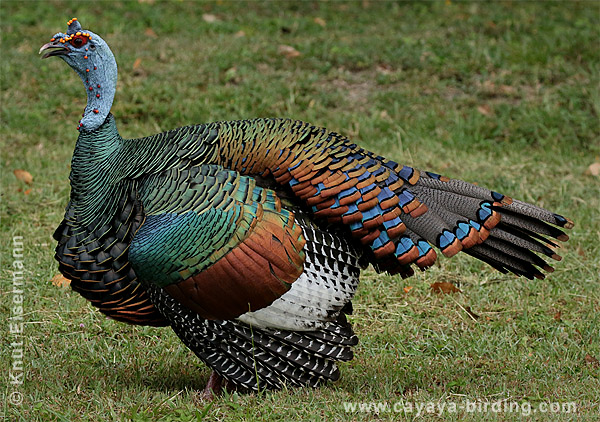
Ocellated Turkeys – endemic to the Yucatán peninsula – are quite tame at Tikal and easy to see. Army ant swarms are often accompanied by mixed foraging flock, with several species of woodcreepers (Northern Barred, Olivaceous, Ruddy, Tawny-winged, and Ivory-billed), Red-crowned and Red-throated Ant-Tanager, Gray-headed Tanager, and Tawny-crowned Greenlet.
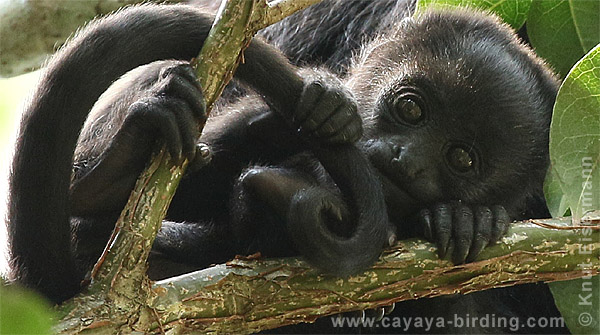
Because hunting is prohibited in Tikal National Park, mammals wander freely between the primary forest and ruins. The most commonly observed mammals are Coaties, Agouties, and Gray Fox walking around the park grounds, and Spider monkeys and Mexican Black Howler Monkeys in the forest canopy.
Access and accommodation: Tikal is easily accessible on paved roads from Flores. Several comfortable hotels are available in Tikal.
When is the best time for birding Tikal? Any time of the year.
How do you support conservation and development in Tikal? With your entrance fee to the National Park you support the conservation of Tikal, which is part of the Maya-Lacandon Important Bird Area (IBA GT001).